
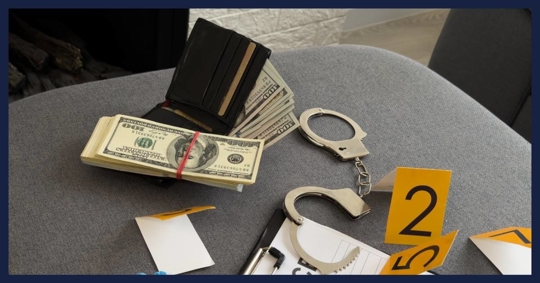
You work hard for what you own. Your car, your home, your savings—these aren't just possessions. They represent years of effort and sacrifice. Yet under civil forfeiture laws, law enforcement can take your property even if you're never charged with a crime. This practice, intended to combat criminal enterprises, has evolved into something far more troubling for everyday Texans who suddenly find themselves fighting to reclaim what's rightfully theirs.
If law enforcement has seized your property or threatened forfeiture, time matters. Contact Benjamin Law Firm through our online contact form or call (915) 320-6730 now to protect your rights.
What Is Civil Asset Forfeiture?
Civil asset forfeiture is a legal process that allows law enforcement to take possession of property they allege was involved in criminal activity or was purchased with the proceeds of a crime. Critically, this is a civil legal action, which means the government files a lawsuit against the property itself, not the property owner. This is why you might see case names that look unusual, such as The State of Texas v. $10,000 in U.S. Currency.
Because the action is civil, the government is not required to meet the high standard of "beyond a reasonable doubt" that is necessary in a criminal case. In most forfeiture proceedings in Texas, the state only needs to show by a "preponderance of the evidence"—meaning it is more likely than not—that the property is connected to illegal activity. This lower legal burden makes it significantly easier for the government to take property, even if no criminal charges are ever filed or a person is later found not guilty of any crime.
The Seizure Process: From Suspicion to Loss
The process of losing your property through civil forfeiture in Texas typically begins with a seizure, which can occur under various circumstances, often without a warrant if the property is seized incident to a lawful arrest or search.
Initial Seizure and Probable Cause
Law enforcement can initially seize property if they have "probable cause" to believe it is contraband or traceable to criminal conduct. Probable cause is a reasonable basis for believing a connection exists between the property and the alleged offense. This standard is relatively low, giving officers significant discretion in the field. Once a seizure occurs, the state has a limited time to notify the property owner and file a lawsuit to formally begin the forfeiture process.
The Role of the "Innocent Owner" Defense
For many people, the most distressing part of civil forfeiture is that it essentially places the burden of proof on the property owner. To get your property back, you generally must file a claim and demonstrate that you have a legal interest in the asset. Furthermore, you will need to prove what is often referred to as the “innocent owner” defense.
To successfully assert this defense, you must demonstrate one of the following:
- You were not involved in the criminal activity that gave rise to the seizure.
- You did not know of the criminal conduct.
- Even if you were aware of the conduct, you did not consent to the activity and took every reasonable step to prevent the conduct from occurring.
Understanding and effectively asserting this defense requires navigating complex legal standards and gathering precise evidence. Attempting to manage this process without legal guidance puts your property at immediate and serious risk.
Why Civil Forfeiture Raises Concerns About Government Overreach
While the stated purpose of civil forfeiture is to disrupt serious criminal enterprises by cutting off their funding, the reality often looks quite different. The practice has drawn widespread criticism across Texas and the country for creating a system that can be easily abused.
- The Profit Incentive: In Texas, law enforcement agencies may retain a significant percentage of the proceeds from forfeited assets. Critics contend this creates a direct financial incentive, where policing priorities may shift toward seizing property that generates revenue rather than focusing purely on public safety.
- The Burden on Citizens: The cost and complexity of fighting a civil forfeiture action can be prohibitively high, especially when the value of the seized property is low. Faced with the choice of spending thousands of dollars on legal fees to recover a smaller amount of cash or a moderately-priced vehicle, many innocent property owners choose to simply abandon their claim. This results in the property being forfeited by default, not because the government successfully proved its case.
- Lowered Legal Standard: By targeting the property rather than the person, the government benefits from the lower "preponderance of the evidence" standard, side-stepping the due process protections afforded to criminal defendants. This structure undermines the fundamental principle of being presumed innocent until proven guilty.
It is precisely these systemic issues that drive our criminal defense work at Benjamin Law Firm. We stand prepared to challenge what we view as unjust governmental actions and fight for the property rights of Texans.
Taking Action Against Unjust Seizure in Texas
If you are facing civil forfeiture proceedings, the most important action you can take is to move decisively to protect your interests. The law dictates strict deadlines for challenging a seizure, and missing a deadline can result in the permanent loss of your property.
Here is a general overview of critical steps an experienced attorney can take immediately:
- Meticulously Review the Seizure: We examine the initial seizure, ensuring law enforcement had the necessary probable cause and followed proper legal procedure. Errors in the initial steps can lead to the return of your property.
- File a Timely Answer and Claim: We ensure all required legal documents are filed correctly and on time, formally notifying the court and the state that you contest the forfeiture and intend to fight to get your property back.
- Prepare and Present Evidence: We work to gather all evidence necessary to support an "innocent owner" defense and to counter the state’s claim that your property is connected to criminal activity. This may include financial records, sworn affidavits, and testimony.
For individuals entangled in a seizure or a forfeiture lawsuit, having a formidable legal ally is not just an advantage—it is a necessity. Our team is committed to delivering strong, focused legal representation, whether you are facing a criminal investigation or a civil dispute related to property seizure. We have experience handling a wide array of criminal defense matters, which often overlap with asset forfeiture cases.
Defend Your Property Rights in Texas
Civil forfeiture threatens the fundamental principle that you're innocent until proven guilty. When government agencies can take your property without charging you with a crime, the balance of power shifts dangerously away from individual rights. You shouldn't have to fight to prove your own property's innocence, but if you're facing seizure, you need experienced legal guidance to navigate this challenging process.
Benjamin Law Firm stands ready to help Texans protect their property rights. Our team understands the complexities of civil forfeiture law and fights to ensure our clients aren't victimized by government overreach. Don't let strict deadlines cost you your property.
Reach out through our online contact form or call (915) 320-6730 to discuss your case and explore your options for recovering what's rightfully yours.